Shear Connectors Engineered
for Bridges That Endure
Factory-direct headed shear studs and connectors built to AWS D1.1 and EN ISO 13918 tolerances — supporting composite deck integrity across highway, railway, and pedestrian bridge projects worldwide.
Composite Bridge Decks Depend on Connection Integrity
Modern bridge engineering increasingly relies on composite steel-concrete construction, where headed shear studs are welded directly onto steel girders to transfer load between the steel frame and the concrete deck. This single connection point carries the structural performance of the entire span — which is why specification documents call out exact diameters, weld penetration, and certified test data before a single stud reaches the job site.
As infrastructure budgets tighten and inspection standards grow stricter, project teams need a stud supplier who understands both the metallurgy and the paperwork — delivering components that pass structural review the first time and keep multi-million dollar schedules on track.

Steel-concrete composite decks now dominate mid-span highway and railway bridge design for their strength-to-weight efficiency.
Cross-border infrastructure projects frequently require simultaneous compliance with AWS D1.1, EN ISO 13918, and BS 5400.
Authority submissions increasingly demand heat-number traceable mill certificates for every stud batch installed on site.
Bridge erection windows are narrow and weather-dependent, leaving no tolerance for supplier-side production delays.
Planning a composite deck bridge and need a spec-matched connector supplier?
Talk to Our Bridge Engineering TeamThe Real Risks Behind Bridge Component Sourcing
A single non-conforming batch of shear studs can ripple through an entire bridge program — triggering re-inspection, remedial welding, or a stalled pour schedule. These are the failure points project teams tell us they fear most.
Stud height variation after welding can shift slab thickness beyond tolerance, failing inspection on decks that were otherwise structurally sound.
Local distributors often supply studs without valid AWS or EN certification, putting the entire structural approval process at risk.
Bridge erection is scheduled around crane access and traffic closures — a late stud shipment cascades into costly re-scheduling penalties.
Poor weld penetration or inconsistent material chemistry compromises fatigue life under the repeated dynamic loads bridges are built to absorb.
Recognize any of these risks from a past project?
See How We Eliminate These RisksPurpose-Built Reliability for Every Deck Connection
We built our bridge-grade production line around the exact failure points that put structural approval at risk. Automated dimensional gauging, dual-standard material certification, and locked production scheduling mean the studs that arrive on your site match the drawings your engineer signed off on — batch after batch, project after project.
- In-line dimensional gauging holds every stud within ±0.3mm of specification
- Dual AWS D1.1 / EN ISO 13918 certification issued as standard, not on request
- Heat-number traceable mill certificates included with every shipment
- Production capacity reserved against your confirmed erection schedule
- Tensile, proof load, and torque testing logged against each order reference

Automated gauging at every cold-heading station catches diameter and length deviation before it ever reaches packing — so slab thickness stays within design tolerance.
Dual AWS D1.1 and EN ISO 13918 compliance with mill certificates issued as standard, so your submission package is complete on the first attempt.
Production slots are reserved against your confirmed erection window, protecting the crane and traffic-closure schedule your project depends on.
Tensile, proof load, and torque testing on every batch confirm the fatigue performance your structure needs to absorb decades of live load.
Ready to remove component risk from your next bridge program?
Request Bridge Certification Package Talk to an EngineerWhere Our Shear Connectors Perform
From urban overpasses to long-span river crossings, our studs and connectors are specified into the structural systems that carry daily traffic loads — matched to the deck type and standard your project calls for.
 01
01
Headed shear studs welded to steel girders lock the concrete deck into full composite action, giving overpass structures the load capacity to handle decades of highway traffic without deck separation.
View Application Details 02
02
Rail loading is heavier and more cyclical than road traffic, so we supply high fatigue-grade studs with verified tensile data, giving track authorities the assurance a deck connection won't fail under repeated axle loads.
View Application Details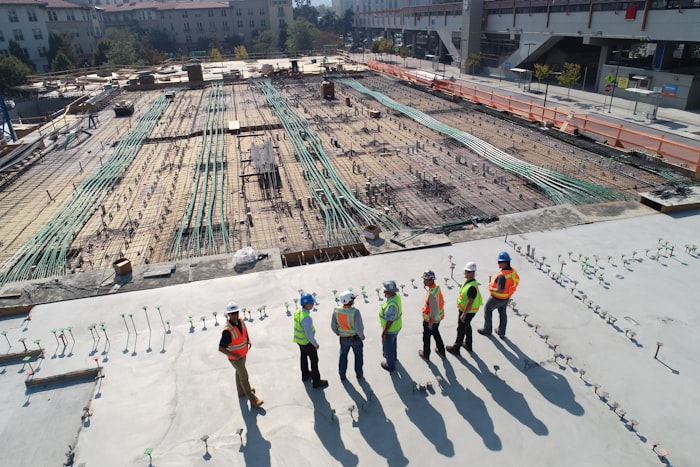 03
03
Lightweight composite deck panels rely on smaller-diameter studs with tight placement accuracy, letting designers achieve slender, economical spans without compromising walkway stiffness or deflection limits.
View Application Details 04
04
Orthotropic and composite deck sections on cable-stayed spans demand certified connectors with consistent weld penetration, so contractors can pass authority inspection without revision on schedule-critical long-span projects.
View Application Details 05
05
Deck panels on truss bridges see concentrated point loading at each panel connection, so we supply studs matched to panel spacing and grade requirements to keep load transfer even across the full span.
View Application Details 06
06
Dense urban transit corridors require fast, precise installation windows, so our pre-verified batch documentation lets erection crews weld straight from the box without on-site re-testing delays.
View Application DetailsNot sure which connector spec fits your bridge type? Send us your drawings for a free review.
Submit Your Bridge DrawingsComponents Specified for Bridge Deck Systems
Every product line below is produced under the same dimensional and metallurgical control standard, giving your procurement team a single certified source for the full connection assembly — not just the stud.
Diameters from 13mm to 25mm and lengths from 50mm to 300mm, produced to AWS D1.1 and EN ISO 13918 for full composite action between girder and deck.
View Product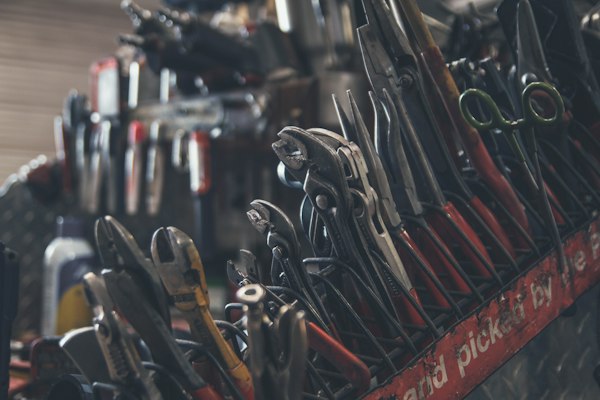
High-purity alumina ferrules matched to each stud diameter contain the arc for a clean, porosity-free weld — critical for passing bend-test inspection on-site.
View Product
High-purity deoxidizing flux balls stabilize the arc and reduce porosity during drawn-arc welding, giving field crews consistent weld quality across every stud fired.
View Product
Drawn-arc and CD welding guns, chucks, and ferrule grippers sourced from trusted OEM partners, backed by spare parts inventory to keep site crews productive.
View ProductNeed help matching product specs to your bridge drawing set?
Browse Full Product CatalogueA Weld Process Built for Inspection-Ready Decks
Every stud we supply is manufactured to perform through this exact sequence — because a certified product only delivers value if the field installation holds up to the same standard.
Stud positions transferred from shop drawings onto the girder flange with laser or template accuracy before any arc is struck.
Drawn-arc or CD welding applied per the qualified procedure — controlling lift, plunge, and weld time for full-strength fusion.
Ceramic ferrule chipped away and the weld collar inspected for a full 360° fillet with no visible porosity or undercut.
Sample studs bend-tested to 15° or torque-tested to specification, confirming weld integrity meets the qualified procedure.
Inspection log completed against the drawing set and stud count, clearing the deck for formwork and concrete pour.
We issue a full welding parameter and procedure guide matched to your stud diameter, base material, and site conditions — ready to attach to your quality plan.
Certified to the Standards Bridge Authorities Require
Structural approval hinges on documentation as much as on the steel itself. Every batch we ship carries the certification your engineer of record needs to sign off on the connection design.
American Welding Society structural welding code, covering stud geometry, mechanical properties, and welding procedure qualification for bridge steelwork.
European standard for welding studs and ceramic ferrules — the reference specification for composite bridge decks across the EU and UK.
Governs the steel bar stock chemistry and mechanical property requirements used as raw material input for our shear stud production.
Conformity marking confirming our shear connectors meet applicable EU health, safety, and performance requirements for construction products.
Need certification samples before you finalize your bridge project's material submittal?
Request Quality Documents Schedule Factory AuditWhat a Certified Supplier Actually Saves You
Choosing a bridge-grade stud supplier is not just a materials decision — it changes the risk profile of your entire schedule. Here is what that translates to on a live project.
Failures
Consistent ±0.3mm tolerance means deck thickness and stud placement pass authority review the first time, without remedial welding.
Life
Verified weld penetration and tensile performance give the connection the endurance to absorb decades of repeated live load cycles.
Time Risk
Reserved production capacity against your confirmed timeline keeps crane bookings and traffic closures from slipping.
Compliance Risk
Dual AWS/EN certification and mill traceability arrive with every shipment, so your compliance package never holds up the pour.
Want to see how these benefits apply to your specific bridge program?
Request a Project ConsultationA Factory Partner Built for Infrastructure-Grade Supply
Bridge programs cannot afford a supplier that treats every order the same way. Twenty years of stud welding manufacturing experience and a 150-strong production team give us the depth to handle both catalogue volume and project-specific engineering review — with a dedicated export team that speaks the language of international procurement documentation.
- Factory-direct pricing with verified production lines open for customer inspection
- Rapid technical quotation within 12–24 hours, including dimensional drawings
- In-house tensile, proof load, and torque testing on every production batch
- Dedicated export documentation team fluent in international trade compliance
- 150+ factory staff and 20+ years of dedicated stud welding manufacturing experience

No trading intermediaries — you access competitive, transparent pricing straight from the manufacturing source.
Two decades focused specifically on stud welding fasteners means every recommendation is grounded in real production experience.
A dedicated production workforce with in-house cold heading, CNC threading, and QC testing under one roof.
Exporting to 60+ countries, we understand regional standards, multi-port routing, and remote project-site delivery.
Share your drawings and standard requirements — our team will respond with a matched product recommendation and certification path within one business day.
Have a bridge-specific technical requirement not covered here?
Ask a Technical QuestionRequest a Quote for Your Bridge Project
Share your drawings, standard requirements, and delivery timeline — our bridge engineering team will respond with a matched product recommendation, certification path, and lead time within one business day.
-
Factory AddressZOCIndustrial Manufacturing Base
Jiangsu Province, China -
Email
-
WhatsApp / Phone
Fill in your project requirements below. Our team will respond with pricing, certification path, and lead time within one business day.