Shear Studs Built for Composite Steel Structures That Must Hold
Composite floor decks and structural steel framing succeed or fail on dimensional consistency. ZOCIndustrial manufactures AWS D1.1 and EN ISO 13918–compliant shear studs and weld studs to ±0.3mm tolerance, so your inspections pass the first time and your project schedule never absorbs a supplier's mistake.
Where Steel Meets Concrete, the Stud Does the Work
Modern steel construction depends on composite action — steel beams and concrete slabs acting as a single structural unit rather than two separate materials stacked together. The shear stud is the component that makes this possible, welded directly through the steel deck into the beam flange to transfer load between the two materials for the life of the building.
Because that connection carries real structural load, the stud's diameter, weld collar, and material grade all have to match the engineer's calculation exactly — not approximately. ZOCIndustrial produces headed shear studs and threaded weld studs to AWS D1.1 and EN ISO 13918 specification, giving structural engineers, fabricators, and general contractors a supply they can specify once and rely on across every floor, every phase, and every project.
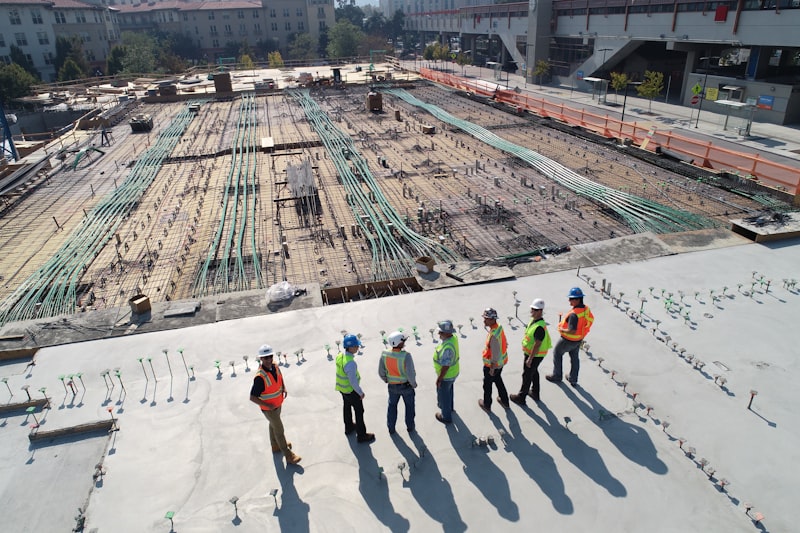
Headed shear studs welded through profiled steel decking bond the slab to the beam, letting thinner concrete sections carry the same design load.
Beam-to-column connections and bracing assemblies rely on weld studs holding tight thread tolerance across every fabrication run.
Long-span composite decks in parking structures need consistent stud height so slab thickness never drifts between bays.
Off-site fabrication schedules demand pre-welded studs that arrive dimensionally exact, so on-site assembly never waits on rework.
Specifying studs for a composite steel project? Let's confirm the exact grade you need.
Talk to Our EngineersFour Problems That Keep Showing Up on Site
Composite construction leaves very little room for supplier error. These are the recurring issues procurement and site teams describe most often with their current shear stud supply — and exactly why we built our production process around eliminating them.
Inconsistent stud height after welding shifts the finished slab thickness out of tolerance, triggering failed inspections across multiple floors.
Local stock frequently lacks the AWS D1.1 or EN ISO 13918 documentation a structural submission requires, stalling authority approval.
Porosity, insufficient fusion, and stud deflection during arc welding force costly re-welds that idle crews already on the clock.
A late stud delivery holds up deck pour dates and pushes every trade scheduled after it, turning one missed date into a project-wide slip.
Recognize any of these problems from your current steel stud supply chain?
See How We Solve ThisOne Factory-Direct System Built for Composite Construction
Instead of treating dimensional accuracy, certification, and delivery as separate risks for your project team to manage, we built one integrated production system that controls all three from raw material to pre-shipment audit — so the studs your crew welds match the studs your engineer specified, every single time.
- Automated in-line gauging at cold-heading holds diameter and length within ±0.3mm across every production batch
- AWS D1.1 and EN ISO 13918 certification, plus mill test certificates with heat number traceability, issued as standard on every order
- Tensile, proof-load, and torque testing on representative samples logged against your order reference before dispatch
- Production scheduling locked at order confirmation with real-time updates, so deck pour dates are never at risk
- Direct engineering support for arc welding parameters and troubleshooting, reachable within 24 hours by WhatsApp, email, or video call

Every batch is gauged in-line and logged, so the stud height that arrives on site matches the sample your inspector already approved — no re-welds, no thickness surprises.
Full AWS and EN documentation ships with every order as standard practice, so your structural submission moves forward without a paperwork delay chasing it after the fact.
Locked production scheduling and real-time updates mean your deck pour date and crew mobilization plan never have to bend around a supplier's delay.
Ready to see this system applied to your composite construction specification?
Request a Quote See Typical ApplicationsTypical Steel Construction Applications
From high-rise composite floors to prefabricated industrial buildings, the same dimensional discipline applies wherever steel and concrete need to act as one structural system.
 01
01
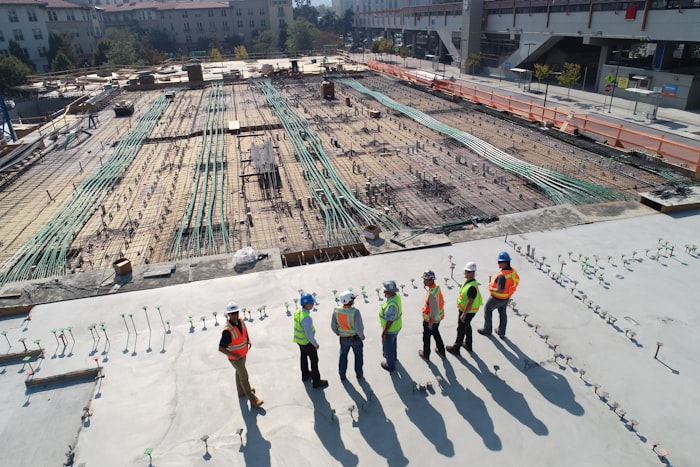
Headed shear studs welded through profiled decking at ±0.3mm tolerance let structural engineers specify thinner slabs with confidence, cutting concrete and dead-load costs floor after floor.
Discuss This Application 02
02
Threaded weld studs holding tight tolerance across long fabrication runs keep beam-to-column connections consistent, so steel erection proceeds without on-site fitting delays.
Discuss This Application 03
03
Pre-welded studs certified and dimensionally exact before they leave our factory mean off-site fabrication schedules hold, and on-site assembly never waits on rework.
Discuss This ApplicationHave a steel construction application not listed here? Our engineers will confirm the right stud for it.
Request Product SpecificationsRecommended Products for Steel Construction
These are the three product lines our engineers specify most often for composite steel projects — each built to the dimensional and welding tolerance that composite action actually requires.
Headed studs from Ø13mm to Ø25mm, welded through profiled decking to transfer load between steel beam and concrete slab, holding ±0.3mm tolerance so slab thickness never drifts between floors.
View Product Details
Internally and externally threaded weld studs with flanged or plain base, produced to tight thread tolerance so beam-to-column fittings and bracing connections assemble without on-site rework.
View Product Details
High-purity alumina ferrules matched to each stud diameter contain the arc during welding, producing the clean, porosity-free weld collar your bend test inspection depends on.
View Product DetailsNeed help matching diameter and grade to your structural drawing?
Request Specifications Download CatalogueHow Shear Studs Get Installed On Site
Understanding the installation sequence helps procurement teams see exactly why dimensional consistency matters at every stage — one out-of-tolerance batch can interrupt a schedule that otherwise runs like clockwork.
Stud positions are marked on the steel beam flange per the engineer's shop drawing before decking goes down.
Profiled steel decking is secured across the beams, exposing the flange at each marked stud location for welding.
A ceramic ferrule contains the drawn arc as the stud base fuses to the flange in under a second per weld.
Sample studs are bent to 30° per AWS D1.1 to confirm full fusion before the pour is authorized.
The slab is poured over the completed studs, locking in composite action for the structural life of the building.
Because the bend test in Step 04 is performed on studs already welded to the beam, a dimensionally inconsistent batch is only discovered after installation has begun — which is precisely why ZOCIndustrial gauges every stud in-line before it ever ships, not after your crew finds the problem.
Want our welding parameter guidance sheet for your specific stud diameter?
Request Installation GuidanceCertified to the Standards Your Project Requires
Steel construction submissions rarely tolerate a certification gap. Every relevant standard below ships with mill test certificates and heat number traceability as standard practice — not an add-on you have to request separately.
American Welding Society structural welding code covering headed stud geometry, mechanical properties, and welding procedure qualification for composite deck systems.
European standard for welding studs and ceramic ferrules, specifying dimensional and mechanical requirements for structural steel projects under EN certification frameworks.
Governs the chemical composition and mechanical property requirements for the hot-wrought carbon and alloy steel bars used as raw material in stud production.
Confirms conformity with applicable European health, safety, and environmental protection requirements for construction products entering the EU market.
Need a specific standard confirmed in writing before you place an order?
Request Certification Documents Schedule Factory AuditThe Value Beyond the Stud Itself
Dimensional accuracy and certification aren't abstract manufacturing details — they translate directly into measurable outcomes on your project's cost, schedule, and approval timeline.
Reliable composite action lets structural engineers specify thinner slabs and lighter beams with confidence, cutting material cost across every floor of the building.
Studs that weld correctly the first time remove the re-weld and rework cycles that otherwise stall crew mobilization and push back the pour date.
Certification and mill test documents included as standard mean your structural submission moves through approval without a paperwork chase.
Fewer bend-test failures, fewer re-welds, and no schedule penalties add up to a lower installed cost than a cheaper stud with hidden supply risk.
Want to see how these benefits translate to your specific project numbers?
Request a Project EstimateA Factory Behind Every Stud We Ship
Steel construction buyers work with ZOCIndustrial because we own the production line that makes the studs, not just the invoice that sells them. That direct control over cold-heading, threading, and welding tolerance is what makes ±0.3mm consistency and same-day certification possible — not a promise from a trading intermediary, but a standard we set on our own factory floor.

No trading intermediary between your order and our cold-heading line, so pricing stays competitive and specification changes get resolved directly with production.
Five inspection checkpoints from raw material to pre-shipment audit mean defects are caught on our floor, long before they could ever reach your site.
Technical questions are answered by people who understand welding parameters and structural specifications, not a sales team reading from a script.
Two decades of shipping to steel construction markets across 60+ countries means we already understand your region's standards, ports, and documentation requirements.
Ready to work with the factory behind the stud, not just another reseller?
Start a ConversationSteel Construction FAQ
Have a project-specific question that isn't covered here? Our engineers are one message away.
Ask a Technical QuestionRequest a Quote for Your Steel Project
Share your diameter, length, standard, and quantity — or simply attach your shop drawing — and our engineering team will confirm the right product, certification path, and lead time within one business day.
Fill in your project requirements below. Our engineering team will respond with pricing, lead time, and certification confirmation within one business day.